In Granby, Quebec, the integrity of natural and engineered slopes and retaining structures is fundamental to safe, durable construction. The Slopes & Walls category encompasses the geotechnical analysis, design, and remediation of earth retention systems and inclined ground surfaces. Whether it's a residential property backing onto the Yamaska River or a commercial development on uneven terrain, understanding soil behaviour under local conditions is critical. A professionally executed retaining wall design or a thorough slope stability analysis is not merely a structural consideration; it is a safeguard against erosion, landsliding, and costly property damage, making it an essential first step for any earthwork project in the region.
The geology of Granby presents specific challenges that make slope and wall engineering particularly pertinent. The area is underlain by sedimentary rocks of the Appalachian foothills, often covered by glacial till and sensitive marine clays deposited by the ancient Champlain Sea. These silty clays can be prone to instability when saturated or disturbed, creating a risk of retrogressive landslides. Furthermore, the freeze-thaw cycles typical of Quebec's harsh winters exert significant lateral pressure on walls and can destabilize shallow slope surfaces. A reliable slope stability analysis must account for these dynamic factors, including groundwater fluctuations and the low bearing capacity of local compressible soils, to ensure long-term resilience.
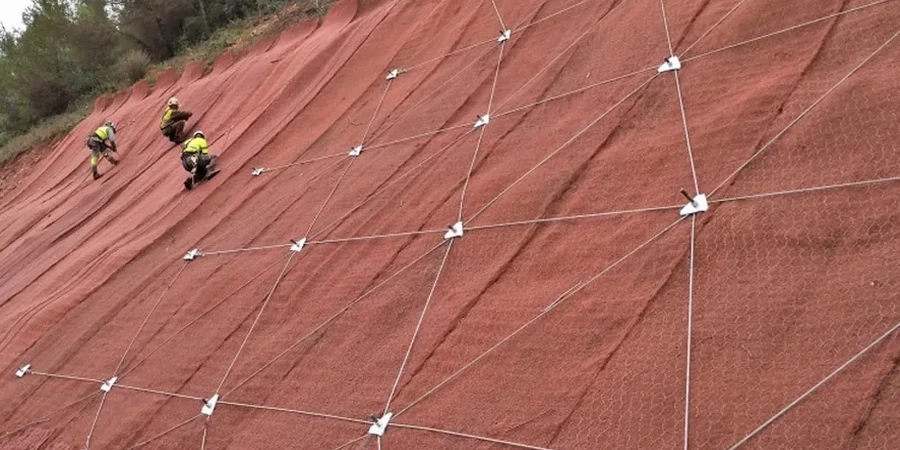
Any project involving slopes or walls in Granby must strictly adhere to the Quebec provincial standards, primarily the Code de construction du Québec, Chapitre I – Bâtiment, which incorporates the National Building Code of Canada with provincial amendments. Geotechnical investigations are governed by CAN/CSA standards, while the design of retaining structures generally follows the Canadian Foundation Engineering Manual and the National Building Code's structural commentaries. Municipal bylaws in Granby also enforce strict rules on excavation, backfilling, and property line setbacks. Crucially, for walls over a certain height or near watercourses, approvals from the Ministère de l'Environnement, de la Lutte contre les changements climatiques, de la Faune et des Parcs (MELCCFP) may be required, ensuring that all retaining wall design work respects environmental protection guidelines for shorelines and floodplains.
The scope of this category serves a wide array of project types. For residential developers, it means stabilizing cut slopes to create buildable lots or designing decorative yet robust garden walls that retain soil without failing. In the commercial and municipal sectors, we see applications in roadway embankments along routes like Highway 112, bridge abutments, and the creation of underpasses. Industrial projects often require massive retaining structures for material storage or to level manufacturing sites. Even agricultural land in the surrounding Montérégie region benefits from properly drained retaining walls to maximize usable acreage and prevent topsoil loss. Each scenario demands a unique, site-specific combination of a slope stability analysis and a tailored retaining wall design.
Available services
Quick answers
What are the early warning signs that a slope or retaining wall on my Granby property might be failing?
Key indicators include the appearance of tension cracks in the soil near the top of a slope, newly leaning trees or fence posts, and bulging or tilting of a retaining wall face. Water seeping through wall joints carrying sediment, settlement of backfill material, and doors or windows that suddenly stick in a nearby structure can also signal ground movement requiring immediate professional assessment.
How do Quebec's environmental regulations affect building a retaining wall near the Yamaska River in Granby?
Construction near the Yamaska River falls under the province's shoreline protection policy, administered by MELCCFP. This typically requires a permit and a geotechnical justification that the wall won't accelerate erosion or harm aquatic habitats. The design must often incorporate bioengineering solutions or specific setbacks from the high-water mark, making a specialized design essential for compliance.
Why is a geotechnical investigation mandatory before a slope stability analysis or wall design in this area?
Granby's complex subsurface, featuring Champlain Sea clays and glacial till, means that soil properties can vary dramatically over short distances. A geotechnical investigation, involving boreholes and laboratory testing, is mandatory under the Quebec Construction Code to accurately determine soil strength, groundwater conditions, and frost susceptibility. Designing without this site-specific data risks structural failure and violates building code requirements.
What is the typical lifespan of an engineered retaining wall in Quebec's climate compared to a non-engineered one?
An engineered retaining wall, designed with proper drainage and frost protection per the Canadian Foundation Engineering Manual, can have a service life exceeding 50 to 75 years. In contrast, a non-engineered wall often fails within 5 to 15 years due to frost heave, inadequate drainage causing hydrostatic pressure buildup, and the use of materials not rated for Quebec's severe freeze-thaw cycles.