In geotechnical engineering, the laboratory serves as the cornerstone of subsurface understanding, transforming physical samples retrieved from the field into quantifiable engineering parameters. The laboratory category in Granby, Quebec, encompasses a comprehensive suite of standardized testing procedures designed to classify soils, assess their strength and compressibility, and predict their behavior under structural loads. This critical phase of investigation moves beyond visual classification, providing the empirical data necessary for safe and economical foundation design, slope stability analysis, and earthworks construction. Without rigorous laboratory testing, projects are exposed to unacceptable risks, ranging from excessive settlement to catastrophic bearing capacity failure, making this an indispensable component of any responsible development in the region.
Granby’s geological context presents specific challenges that amplify the importance of precise laboratory testing. Situated within the St. Lawrence Lowlands, the area is characterized by complex Quaternary deposits overlying Paleozoic sedimentary bedrock. These surficial materials often include glaciolacustrine clays and silts from the former Champlain Sea, which are notoriously sensitive and prone to disturbance. The presence of these soft, compressible soils demands accurate determination of parameters like moisture content and Atterberg limits, while granular deposits from glacial outwash require careful particle size distribution analysis. Understanding the local hydrogeological regime, where perched water tables and artesian conditions can exist, makes specialized testing such as in-situ permeability assessments vital for correlating lab results with field behavior.
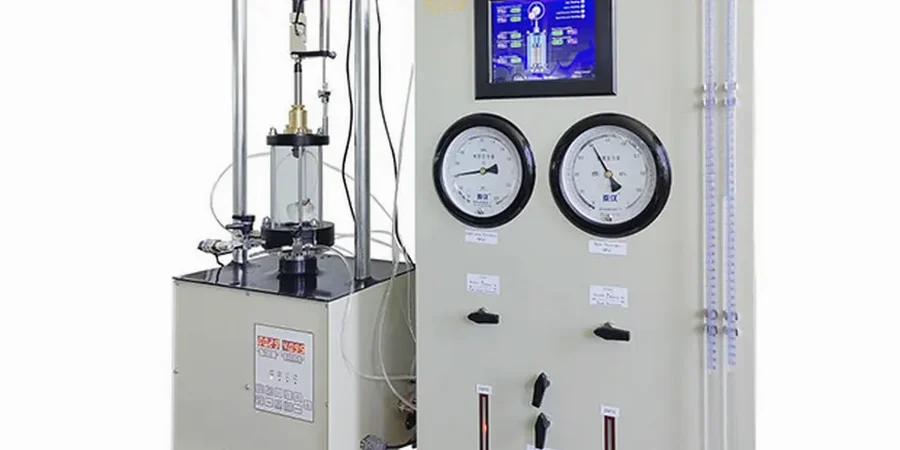
All laboratory testing conducted in Quebec must adhere to stringent national and provincial standards to ensure legal defensibility and engineering reliability. The primary framework is the Canadian Foundation Engineering Manual, which directs practitioners to standardized methods. Testing procedures strictly follow ASTM International standards, with additional compliance often required with CSA (Canadian Standards Association) norms, particularly CSA A23 for concrete aggregates and CSA Z317 for environmental assessments. For projects under provincial jurisdiction or involving public infrastructure, conformity with the Ministère des Transports du Québec (MTQ) Cahier des Charges et Devis is mandatory. These standards dictate everything from sample preparation and curing conditions to equipment calibration, ensuring that a grain size analysis (sieve + hydrometer) performed in Granby yields results that are consistent, repeatable, and accepted by regulatory authorities.
The necessity for comprehensive laboratory investigation spans virtually all construction and civil engineering projects in the Granby region. Residential subdivisions on clay-rich soils require consolidation testing to predict long-term settlement, while commercial and industrial developments demand shear strength testing for deep foundation design. Infrastructure projects, such as road widenings along Route 112 or new municipal watermains, rely heavily on Proctor compaction testing and California Bearing Ratio (CBR) values to ensure durable pavement structures. Environmental projects, including landfill closures and brownfield redevelopments, utilize chemical analysis and leachate testing from soil samples. Even smaller-scale works, like the construction of a residential retaining wall, benefit from basic index testing to confirm design assumptions, preventing costly failures in expansive or frost-susceptible soils.
Available services
Quick answers
What is the typical turnaround time for a standard geotechnical laboratory testing package in Granby?
Turnaround times vary based on the soil type and specific tests requested. Basic index tests like moisture content and Atterberg limits can often be reported within 3 to 5 business days. More time-consuming procedures, such as consolidation testing which requires incremental loading over several days, or grain size analysis with hydrometer, may require 1 to 2 weeks. Expedited services are often available for time-sensitive projects.
How should soil samples be handled and shipped to maintain their integrity for laboratory analysis?
Sample integrity is paramount and is governed by ASTM D4220. Thin-walled Shelby tube samples of sensitive clay must remain sealed, upright, and protected from shock and temperature extremes. Jars for disturbed samples should be filled completely to minimize moisture loss. A certified chain of custody form must accompany all shipments, and samples should be delivered to the laboratory promptly to prevent biological activity or chemical alteration before testing commences.
Which laboratory tests are most critical for building on the Champlain Sea clays common in the Granby area?
For the sensitive Champlain Sea clays, a suite of tests is essential. Oedometer consolidation testing is critical to quantify settlement magnitude and rate. Unconsolidated undrained (UU) triaxial compression tests determine the short-term shear strength for bearing capacity calculations. Atterberg limits help classify the clay's plasticity and potential for volume change, while accurate water content determination is fundamental to all subsequent correlations and analyses.
How do laboratory test results influence foundation design decisions for a typical residential project?
Laboratory results provide the direct inputs for engineering calculations. Grain size distribution and Atterberg limits classify the soil, allowing for preliminary bearing capacity estimates. Shear strength parameters from direct shear or triaxial tests dictate the allowable bearing pressure to prevent a shear failure. Consolidation parameters are used to calculate the total and differential settlement a footing might experience, directly influencing the choice between a conventional spread footing and a more rigid raft or deep pile foundation.